

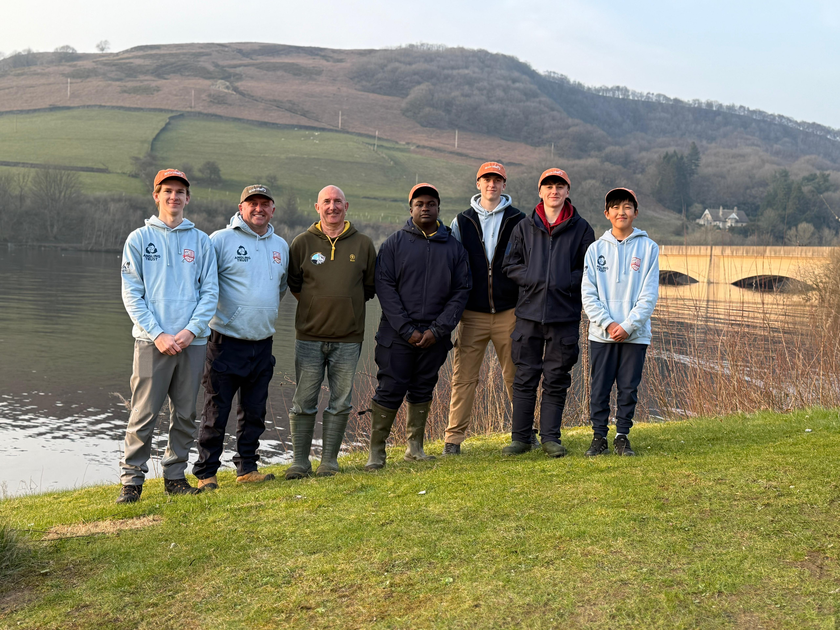
On Saturday 21 March, the team travelled to Ladybower in Derbyshire for a boat session as part of preparations for the 2026 Youth World Championships in Ireland.
Ladybower is one of those waters that carries presence before a line is even cast. Its top water level sits around 668 feet above sea level, with roughly 13 miles of shoreline, so it has the scale, exposure plus sweep you expect from a proper upland reservoir rather than a neat commercial stillwater.
What struck the group straight away was the character of the place. The setting is breathtaking, though it is not only scenic in a postcard sense. It feels wild, open, weather-shaped. The surrounding Dark Peak landscape is heavily influenced by blanket peat plus moorland catchment, which likely explains the tea-stained, reddish-brown cast of the water. That colour gives Ladybower a distinctive mood of its own, one that feels very different from clearer, lower-lying fisheries.
We have spoken about visiting Ladybower more than once over the years, yet had never quite got round to it. Having now fished it, every one of the boys agreed on the way home that it is their favourite loch-style stillwater visited so far.
That reaction was not simply about the scenery. The water fished well, the boats gave the lads room to cover water properly, and we were looked after exceptionally well throughout the day. It felt like a venue that understands fly fishing, rather than one that merely allows it.
What made the session especially pleasing, though, was the method.
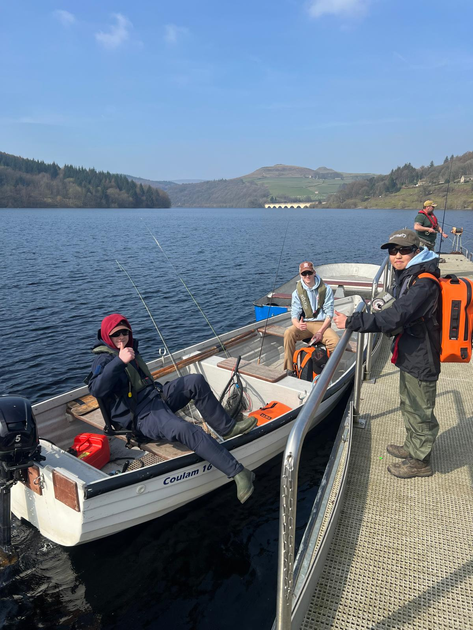
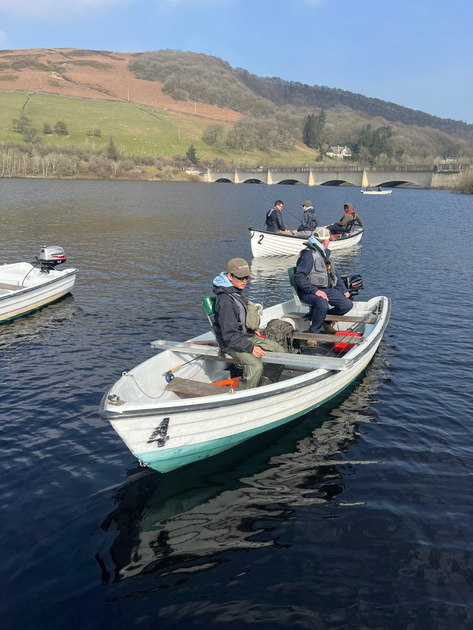
The boys fished wets plus dries. No lures. No bung. No indicators. Just a deliberate return to straightforward, imitative fly fishing.
That matters more than it may sound.
A bung has a clear purpose on stillwater. It suspends flies at a set depth, keeps them in the zone, plus helps the angler register softer takes. It is an effective method, often a very effective one. Fishing without it changes the whole conversation. The angler has to find the taking depth through drift, pace, angle, depth control plus line contact rather than relying on a floating marker to hold everything in place.
The same applies when stepping away from lures. Lure fishing has its place, especially when you need to provoke or search quickly, yet a day on wets plus dries asks better questions of young anglers. Are they watching the water closely enough? Can they read movement rather than thrash it? Can they maintain tension, manage the hang, fish the upper layers intelligently, plus stay alert to subtler takes? Can they trust natural presentation?
Those are not minor points when preparing a team for Ireland.
Wets demand feel. They reward control, rhythm plus confidence in the cast as it swings, lifts or simply comes alive on a change of pace. Dries ask for observation, restraint plus nerve. They are visible, honest, unforgiving of sloppy watercraft. On stillwaters, dries remain one of the most natural ways to target fish feeding high in the water, particularly when trout are willing to look up rather than chase something gaudy stripped across the surface.
So although the day was thoroughly enjoyable, it was useful too.
It reminded the boys that fly fishing does not always need dressing up with novelty. Sometimes the best preparation comes from stripping things back. Fishing wets plus dries from the boat on a big, atmospheric water like Ladybower forces concentration. It sharpens observation. It keeps anglers connected to drift, rise forms, takes plus the subtle clues that matter when conditions are less obvious.
That, more than anything, was the value of the session.
Ladybower gave the team a superb day on the water, though it also offered something else: a reminder that traditional principles still stand up. Read the water. Fish with intent. Stay connected. Let the method do its work without overcomplicating it.
By Marsha Blissett, Team Manager, England U18 River & Bank Team.
